
Communities Taking Control
At the end of the last blog we highlighted the importance of trainining AI on data that faithfully reflects different linguistic and cultural communities in order to ensure that AI models ar inclusive.
As we have already discussed in this series, in order to have enough data to include languages such as Welsh within large multilingual language models, companies such as OpenAI and Anthropic collected large quantities of material from websites and other collections to train their models. The aim was to ensure that the models could understand and produce text in languages that have less digital data available, such as Welsh or Swahili, as well as global languages such as English and Spanish. But if the models are to reflect the communities that speak these languages, the training data must also reflect the culture and its internal diversity rather than just being machine translations of texts originally created in another language.
When collecting this massive training data, it is worth noting that the trainers of the major language models did not necessarily seek permission from the owners of the data nor the permission of the wider linguistic and cultural communities that gave rise to the data. The most common practice among the large American corporations with the resources to train state-of-the-art models is to rely on the fair use protection available under American law. That defense has held up in some cases — most notably in Bartz v. Anthropic (2025), where a US court found that training on lawfully acquired texts was fair use. But no binding precedent has been set, and copyright holders around the world continue to challenge the practice.
But in addition to the debate in terms of copyright and licensing, the question of the extent to which companies or organizations need to secure permission remains. Some linguistic and cultural communities have welcomed seeing their language and culture represented within new technical developments, as in the case of Icelandic, the language of Iceland, which will be discussed below.In the case of other languages — especially those that have borne the heavier weight of colonial oppression — prominent advocacy groups have been pushing for different terms and conditions before allowing their language and culture to be used to train AI.
One example of this is FPIC – Free, Prior and Informed Consent – as discussed in the context of Indigenous Languages1 in [1,2] which offers an important alternative in respect of terms which should be placed on the use of data from linguistic and cultural communities.
Community Control and Consent
According to the United Nations Permanent Forum on Indigenous Issues:
“[FPIC] must be ensured by companies and developers that use Indigenous Peoples’ data, knowledge, or cultural heritage in AI systems.
Decisions on the development and use of AI are currently led by powerful governments and major tech companies such as Microsoft, Google, and Amazon, with little or no representation of Indigenous Peoples. This exclusion raises serious concerns, including the lack of FPIC for the use of Indigenous data, knowledge, images, or identities in AI systems. The lack of meaningful participation in the development of AI regulations and ethical frameworks, whether in multilateral forums or private spaces led by the tech sector, can significantly undermine efforts that AI development respects and protects the rights of Indigenous Peoples. [2]”
FPIC therefore emphasizes that communities should have the right to decide whether their language and knowledge is used, how it is used, and for what purpose, including in AI training. Kasosi goes further, stating:
“When AI systems extract, process, and monetize Indigenous knowledge without FPIC, they are not innovative, they are colonial. They perpetuate centuries of exploitation under the guise of progress. This is data colonialism, and its effects are no less destructive than the physical resource extraction that preceded it.” [1]
On top of avoiding colonial behavior, this type of approach or framework could help resist the spread of “AI Slop” and the Doom Spiral (which is ‘tighter’, ‘faster’, more catastrophic, perhaps, for a language with fewer resources) by prioritizing quality, context, and community authority over scraping anything and everything from the web. Rather than treating underrepresented languages as empty data sources to be filled by machines, it recasts them as living cultural systems that require care, permission, and control. But this is not a problem for the giants of AI to solve alone — though they too have a role to play, as we’ll see in the next section.
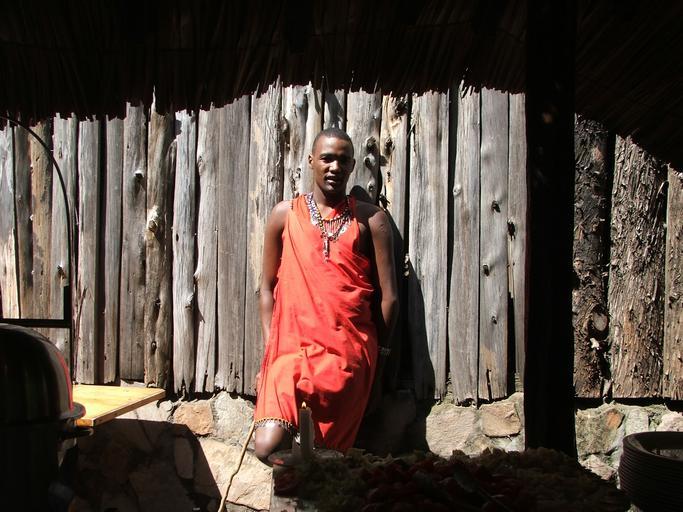
Photo of a member of the indigenous Maasai tribe licensed freely under the Pixabay licence .
Grassroots AI Initiatives and Beyond
Kasosi [1] noted that a number of smaller projects around the world have taken the bull by the horns in terms of AI, rather than being passive and waiting for the companies and organizations etc. to provide suitable cultural AI. He cites the Native AI Working Group in North America, together with a project that creates tools to renew the Maasai language Maa to exemplify this. Markl et al. [3] add Masakhane NLP and the Distributed AI Research Institute (DAIR) to the list of projects that espouse community-led AI research.
Internationally, Mozilla Data Collective (MDC), a platform launched in 2025 by the Mozilla Foundation [4] is another prominent project that believes in the importance of involving communities. The platform allows contributors to share data, retain ownership of it, and control who uses it — offering flexible licensing, and options to set custom restrictions or request recognition or payment [5]. This is in direct contrast to the extractive, colonial model criticized by Kasosi [1]. Although it is not a grassroots community project in the same way as other projects, it offers an infrastructure that could enable language communities — including minority language communities — to manage their data on their own terms.
And what about the involvement of governments in AI? Many governments around the world have recognized the importance of AI to their communities and cultures and have been enthusiastic about collaborating with big AI. A relatively recent obvious example is the collaboration between the Icelandic government and OpenAI. According to OpenAI [6]:
“On the initiative of the country’s President, HE Guðni Th. Jóhannesson, and with the help of private industry, Iceland has partnered with OpenAI to use GPT‑4 in the preservation effort of the Icelandic language—and to turn a defensive position into an opportunity to innovate.
Guðmundsdóttir [6] adds:
“We want to make sure that artificial intelligence will be used not only to help preserve language, culture and history, but also to underpin economic prosperity”
So solving some of the challenges of AI, such as those we have discussed in this series, and others, is dependent on the inclusion of the community [7,8]. To what extent do we do this in Wales, I wonder? Well, as stated in the first blog of this series, we in the Language Technologies Unit have already collaborated with some of the massive AI companies. For example we have evaluated GPT’s Welsh output and then reported the results back to OpenAI and the Welsh community.2 Beyond the Unit, the Welsh Government has also developed a data partnership with OpenAI since 2024. Through this partnership, the Welsh Government hopes to improve the way AI systems deal with the Welsh language [9].
And the partnership has already borne fruit. The Government [10] reports that:
“as part of our partnership with OpenAI to improve how ChatGPT processes Welsh, we ran a joint project with the National Library of Wales where OpenAI used AI technologies to transcribe Welsh handwriting. Discussions are ongoing with OpenAI about the next projects, for example working with Geiriadur Prifysgol Cymru to use their materials to improve how AI processes the Welsh language.”
But not every linguistic community is lucky enough to have elected representation that is willing to argue its case. There is a fundamental difference between the governments of Wales and Iceland’s partnerships with OpenAI and the situation of some other linguistic communities, where the only way of working together that protects the community’s interests is often to carry out grassroots projects and establish consent frameworks. However, whether at community or national level, this is a question of sovereignty — and that will be the subject of the next blog! Bye for now!
1 We do not necessarily consider the Welsh language an Indigenous Language or the Welsh an Indigenous People, but in this context we feel that what applies to Indigenous Communities applies to our culture in Wales.
2 See chapter 5 of our book Language and Technology in Wales – Volume II
Bibliography
[1] Kasosi, L. (2025). “Indigenous Peoples and AI: Defending Rights, Shaping the Future of Technology.” Retrieved 12/12/25, from https://www.culturalsurvival.org/news/indigenous-peoples-and-ai-defending-rights-shaping-future-technology.
[2] United Nations permanent forum on Indigenous issues. (2025). “International Day of the World’s Indigenous Peoples 2025 Virtual commemoration.” Retrieved 12/12/25, from https://social.desa.un.org/sites/default/files/IDWIP%202025%20Concept%20Note%20FINAL.pdf.
[3] Markl, N., L. Hall-Lew a C. Lai (2024). Language Technologies as If People Mattered: Centering Communities in Language Technology Development, Torino, Italia, ELRA and ICCL.
[4] Reid, K.(2025). “Your datasets, under your control: Introducing the Mozilla Data Collective”. Retrieved 08/10/25, from: https://www.youtube.com/watch?v=rl7QvFqjXFA.
[5] Mozilla Data Collective (2025). “About Mozilla Data Collective”. Retrieved 08/10/25, from https://community.mozilladatacollective.com/about/
[6] OpenAI (2024). “Government of Iceland”. Retrieved 15/06/26 from https://openai.com/index/government-of-iceland/
[7]Helm, P., G. Bella, G. Koch a F. Giunchiglia (2023). Diversity and Language Technology: How Techno-Linguistic Bias Can Cause Epistemic Injustice.
[8] Freitas, D. C. T. a H. L. Cardoso (2025). A Nightmare on LLMs Street: On the Importance of Cultural Awareness in Text Adaptation for LRLs, Bologna, Italy, UP – Universidade do Porto (https://doi.org/10.21747/978-989-9193-73-4/lan2), LIACC – Laboratório de Inteligência Artificial e Ciência de Computadores da Universidade do Porto, CLUP – Centro de Linguística da Universidade do Porto, UEF – The University of Eastern Finland and UAH – Universidad de Alcalá.
[9] Llywodraeth Cymru (2024a). “ChatGPT learns Welsh”. Retrieved 15/06/26 from https://www.gov.wales/chatgpt-learns-welsh
[10] Llywodraeth Cymru (2024b). “Cymraeg 2050: Welsh language strategy action plan 2025 to 2026”. Retrieved 15/06/26 from https://www.gov.wales/cymraeg-2050-welsh-language-strategy-action-plan-2025-2026-html